
What is SEO? An Introduction to SEO Basics
Introduction
If you have ever wondered, “What is SEO?” and why some websites appear on the first page of Google while others remain unseen, you’re not alone. In today’s digital world, SEO—Search Engine Optimization—is one of the most important tools for gaining online visibility.
Understanding what SEO is and how it works can help your website attract more visitors, build trust, and grow your business organically. This guide will walk you through SEO basics in a simple, beginner-friendly way.
What Is SEO?
Definition: What Is SEO Exactly?
What is SEO? SEO stands for Search Engine Optimization. It is the process of optimizing your website so search engines can understand it better and rank it higher in search results.
Why Knowing What SEO Is Matters
- It boosts organic (free) traffic.
- It builds credibility and trust.
- It improves user experience.
- It supports long-term business growth.
By understanding what SEO is, you can implement strategies that help your website stand out.
Many beginners often ask what is SEO? because understanding it is the foundation of growing a website organically.
Understanding what is SEO is the first step toward building a strong online presence.
When you apply SEO basics correctly, your website becomes easier for search engines
to crawl, index, and rank. If you’re still wondering what is SEO and how it benefits
your business, remember that SEO helps attract organic traffic, improves visibility,
and builds long-term trust with your audience.
Many beginners search for what is SEO because they want a reliable way to grow
organically. SEO is not just about keywords; it’s about creating content that
provides value, improves user experience, and earns trust from search engines.
When you understand what is SEO deeply, you can build a website that consistently
attracts the right audience. By now, you should have a clear idea of what is SEO and why it matters for every
website. Once you start applying these simple techniques, you’ll notice a steady
improvement in your rankings and traffic. If you want help or still have questions
about what is SEO, feel free to reach out for personalized guidance.
How Search Engines Work
To understand what SEO is, you need to know how Google processes websites.
1. Crawling
Search engine bots crawl websites and collect data.
2. Indexing
Google stores the crawled information in its database (index).
3. Ranking
Pages are ranked based on quality, relevance, and user experience.
Knowing this process helps you understand why SEO is important for visibility. A strong digital strategy always begins with learning what is SEO
The Three Main Pillars of SEO
Understanding what SEO is also means knowing its three core categories:
1. On-Page SEO
- Keyword optimization
- Meta tags
- Headings
- Internal links
- High-quality content
2. Off-Page SEO
- Backlinks
- Social signals
- Brand authority
3. Technical SEO
- Page speed
- Mobile optimization
- HTTPS
- XML sitemap
- Robots.txt
These three pillars explain the foundations of what SEO is and how it improves website performance.
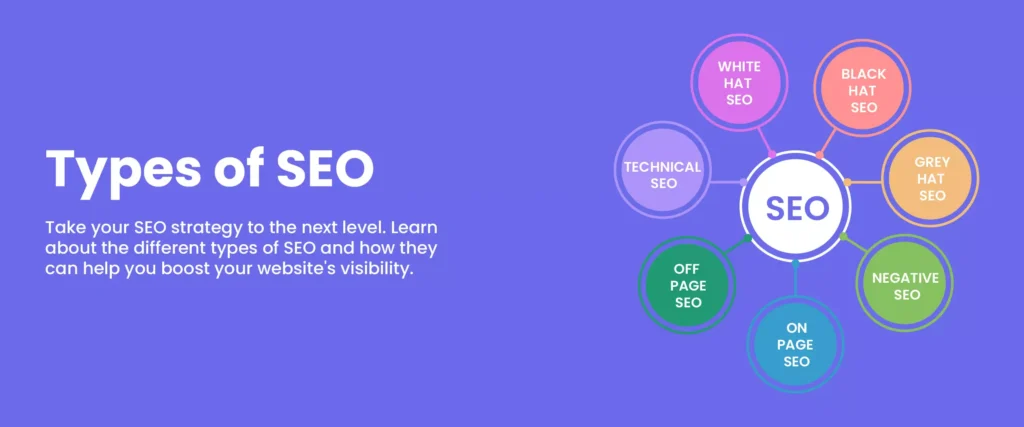
Types of SEO
1. White Hat SEO
Ethical strategies aligned with Google guidelines.
2. Black Hat SEO
Risky tactics that may get your site penalized.
3. Local SEO
Helps you rank for local searches like “near me.”
4. E-Commerce SEO
Optimizes product pages, categories, and structure for online stores.
All these types support your understanding of what SEO is across different industries.
The Role of Keywords in SEO
Keywords are a major part of understanding what SEO is and how users find your website.
Types of Keywords
- Short-tail keywords
- Long-tail keywords
- LSI keywords
Keyword Research Tools
- Google Keyword Planner
- Ahrefs
- SEMrush
- Ubersuggest
Best Keyword Placement
- Title
- Meta description
- Headings
- Body content
- URL
- Image alt tags
When learning what SEO is, keyword placement is one of the first skills to master.
Content Is King in SEO
High-quality content shows Google your page is valuable.
What Makes Content High-Quality?
- Original
- Relevant
- Useful
- Well-structured
EEAT Principles
Experience, Expertise, Authority, Trust.
These elements help Google determine what SEO is from a quality perspective.
Avoid Duplicate Content
Copying content damages rankings.
Update Old Content
Fresh content improves SEO health.
Important SEO Metrics & Tools
If you truly want to understand what SEO is, you need the right tools.
SEO Metrics to Track
- Organic traffic
- CTR
- Bounce rate
- Domain authority
- Backlinks
Useful SEO Tools
- Google Analytics
- Google Search Console
- SEMrush
- Ahrefs
- Screaming Frog
Common Myths About What SEO Is
- SEO delivers instant results — False
- Keyword density is the most important factor — False
- More backlinks automatically improve ranking — False
- SEO is done once — False
Best SEO Practices for Beginners
- Do keyword research
- Optimize title & meta tags
- Use the focus keyword (like “What is SEO?”)
- Improve speed & mobile experience
- Build quality backlinks
- Regularly update your content
Following these steps will help you master what SEO is in real-world practice. Understanding what is SEO helps you create content that ranks better. If you clearly know what is SEO, you can optimize your pages more effectively.
Once you clearly understand what is SEO?, you can start applying these strategies to improve your site’s visibility. A common mistake people make while learning what is SEO? is focusing only on keywords and ignoring user experience. If you’re still wondering what is SEO?, remember that it’s a long-term process that requires consistent optimization.
Conclusion
So, what is SEO? It’s the strategic process of improving your website to get more visibility, traffic, and trust from search engines and users. SEO is not a one-time task—it’s an ongoing effort that delivers long-term benefits.
For more detailed guidelines, you can refer to Google’s official SEO documentation:
https://developers.google.com/search/docs/fundamentals/seo-starter-guide
You can also learn about SEO best practices on:
https://moz.com/learn/seo/what-is-seo
Check out our Digital Marketing Services:
https://veltrixtech.in/digital-marketing-services/
Learn more about how SEO works in our services section:
https://veltrixtech.in/seo-services-in-india/
If you want help improving your website:
https://veltrixtech.in/contact-us/
SEO-Optimized FAQ Section
1. What is SEO in simple words?
SEO, or Search Engine Optimization, is the process of improving your website so it appears higher in search results. When someone asks what is SEO, the simplest answer is that it helps search engines understand and rank your content better.
2. Why is SEO important for a website?
SEO is important because it increases your website’s visibility, brings organic traffic, and builds trust. When you understand what is SEO and use the right strategies, your site can rank higher without spending money on ads.
3. How long does SEO take to show results?
Most websites start seeing improvement in 2–3 months. However, full results can take 4–6 months depending on competition, content quality, and consistency. This is why learning what is SEO early helps you stay ahead of competitors.
4. What are the main types of SEO?
The three main types are On-Page SEO, Off-Page SEO, and Technical SEO. Knowing what is SEO means understanding how these three work together to improve ranking and user experience.
5. Can beginners learn SEO easily?
Yes, beginners can learn SEO easily by understanding the basics like keywords, content quality, backlinks, and user experience. Once you grasp what is SEO, applying the fundamentals becomes simple and effective.
6. Do I need tools to do SEO?
You don’t need expensive tools to get started. Free tools like Google Analytics, Google Search Console, and Keyword Planner are enough. These help you understand what is SEO and how your site is performing.
7. Is SEO better than paid ads?
SEO gives long-term, stable traffic without paying for clicks, while ads provide instant but temporary results. Understanding what is SEO helps you build organic growth that continues even when you stop spending on ads.